
Biogas Handling & CHP Systems
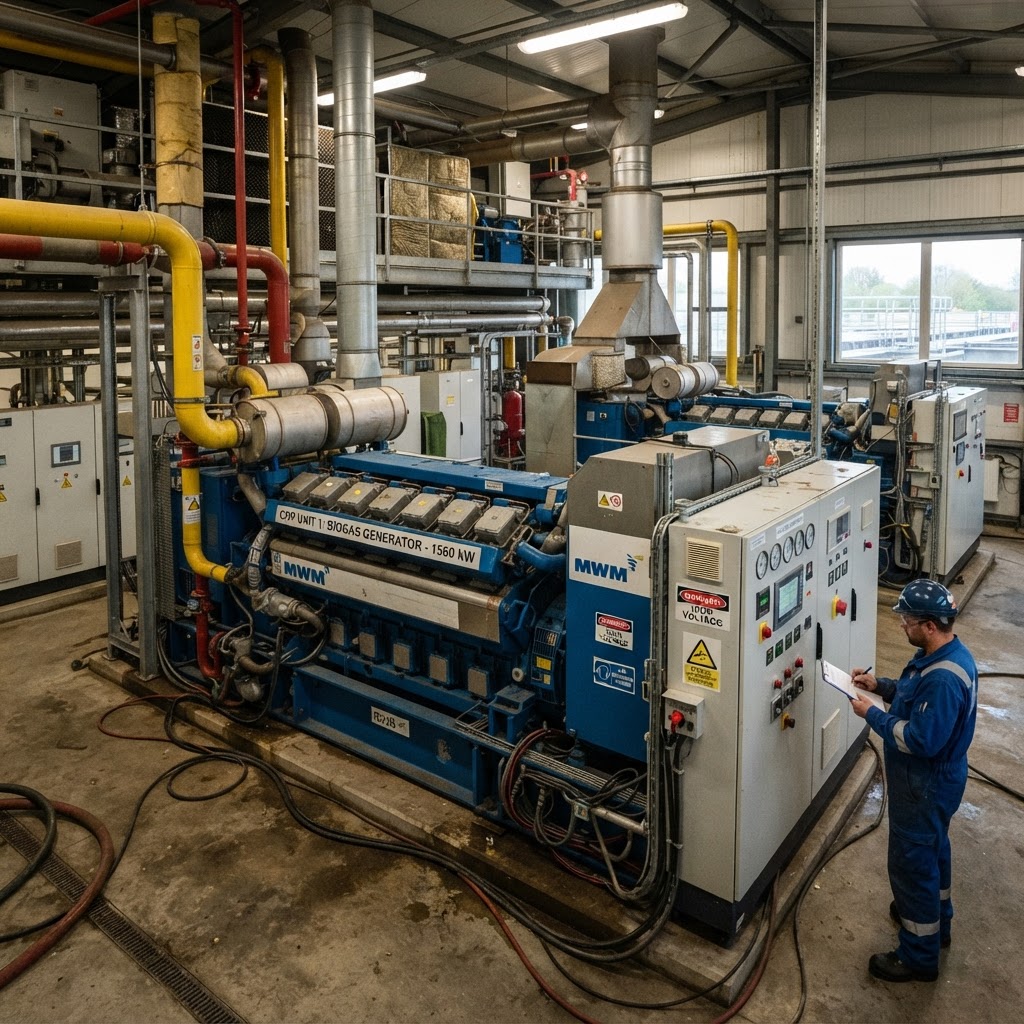
Gas storage, scrubbing, and combined heat and power engines that turn biogas into usable energy.
Raw biogas (60-65% methane) typically needs moisture removal and hydrogen sulfide scrubbing before use in engines or boilers to prevent corrosion damage.
Combined heat and power (CHP) engines burn biogas to generate electricity on-site while capturing waste heat to help meet digester heating demand.
Gas storage (typically in the digester cover itself or a separate holder) buffers short-term supply and demand mismatches between production and CHP engine load.
Watch for: declining gas quality (rising H2S or moisture) reducing engine life, and flare activation frequency, a sign gas production exceeds current beneficial use capacity.
Iron sponge and activated carbon media are common low-cost H2S scrubbing methods for smaller CHP installations, while larger plants often use a regenerable liquid redox or biological scrubbing system for continuous high-volume gas cleanup.
CHP engine maintenance intervals are typically tied to operating hours rather than calendar time, and gas quality directly affects how quickly that maintenance interval is reached — dirtier gas means more frequent oil changes and component wear.
The industry's most useful newsletter, straight from the plant floor.
One email. No fluff. New lessons, equipment breakdowns, and process control notes, delivered when there's something worth reading.