
Anaerobic Digestion: Optimizing Biogas Production
Volatile solids destruction, loading rate, and temperature control determine whether your digesters produce usable biogas or just sit there mixing sludge.
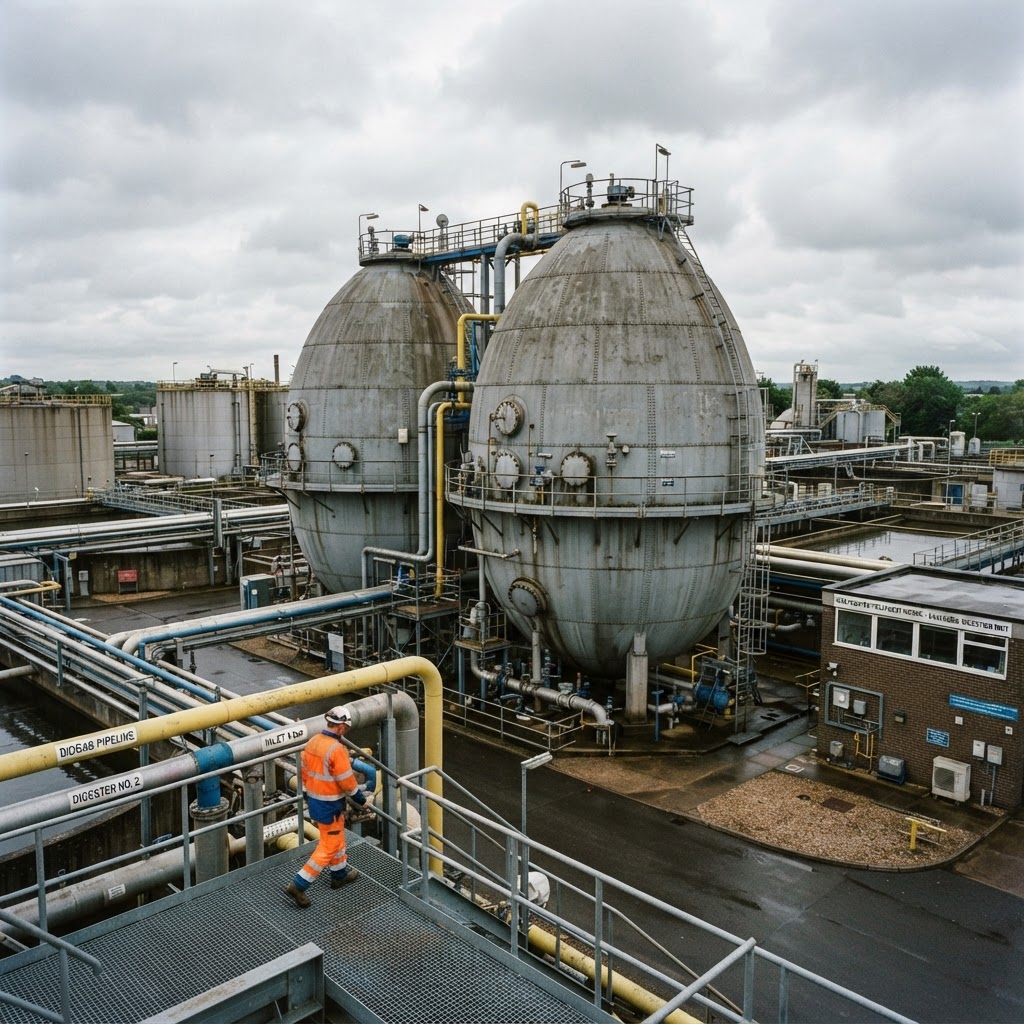
Anaerobic digestion looks simple from the control room: feed sludge in, mix it, keep it warm, and biogas comes out. In practice, digester performance swings widely between plants running nearly identical equipment, and the difference almost always comes down to three variables operators can actually control: organic loading rate, temperature stability, and mixing.
Organic loading rate (OLR), expressed as pounds of volatile solids fed per day per 1,000 cubic feet of digester volume, is the single best predictor of digester health. Mesophilic digesters typically run 0.10-0.15 lbs VS/day/cu ft; pushing well above that starves the system of alkalinity relative to the acid load, and volatile fatty acids accumulate faster than methanogens can consume them. Once VFA concentration climbs past roughly 250-300 mg/L as acetic acid while alkalinity stays flat, pH begins to drop and the digester is on a trajectory toward souring, even if gas production still looks normal for another few days.
Temperature stability matters more than the specific setpoint. Mesophilic digestion runs comfortably at 95-98°F, but methanogens are far more sensitive to swings than to the absolute number. A 2-3°F swing within a single day, common when heat exchangers cycle on sludge that's colder than expected, can measurably suppress gas production for the following week. If your digester heating system cycles rather than modulates, check how wide that temperature band actually is; tightening it is often cheaper than any other biogas optimization project.
Mixing keeps solids in suspension, prevents stratification, and gets fresh feed into contact with the active bacterial population instead of just displacing gas-depleted material out the overflow. Under-mixed digesters develop a floating scum layer and a heavy grit layer at the bottom, both of which quietly reduce effective working volume. If your digester's actual retention time (accounting for that lost volume) has drifted below 15 days, expect volatile solids destruction, and biogas yield, to fall even though your feed volume hasn't changed.
Volatile solids destruction is the number that ties loading, temperature, and mixing together into a single performance metric. Well-run mesophilic digesters typically destroy 40-55% of volatile solids fed; consistently landing below 40% points to one of the three variables above being out of range, not a mysterious biological problem. Track VS destruction monthly using influent and digested sludge VS data rather than relying on gas volume alone, since gas meters drift and don't distinguish digester performance from simple feed volume changes.
Co-digestion, adding high-strength organic waste like food waste or fats/oils/grease alongside municipal sludge, has become a common way to boost biogas yield and offset heating costs. It also raises the stakes on all three core variables: high-strength feedstocks push OLR and VFA production up fast, and a digester that was comfortably stable on sludge alone can sour within days of an aggressive co-digestion ramp-up. Any co-digestion program should increase feed incrementally over weeks, with VFA and alkalinity tracked closely during the ramp, not just gas yield.
A useful benchmark for evaluating your own digester: compare gas production per pound of volatile solids fed (typically 12-18 cubic feet of biogas per pound of VS destroyed for domestic sludge) against your own historical average. A meaningful drop in this yield, even with stable feed volume, is often the earliest indicator that one of loading, temperature, or mixing has quietly drifted before any other symptom appears.
Sampling supernatant or centrate quality from the digester periodically, not just gas volume and VFA/alkalinity, rounds out the performance picture; a digester producing normal gas volume but poor-quality supernatant can still be creating downstream problems in the liquid treatment train.
Don't stop at the article.
The industry's most useful newsletter, straight from the plant floor.
One email. No fluff. New lessons, equipment breakdowns, and process control notes, delivered when there's something worth reading.