
Odor Control Strategies That Actually Work
Hydrogen sulfide complaints from neighbors are usually solvable, but only if you correctly identify where in the process the odor is actually generated.
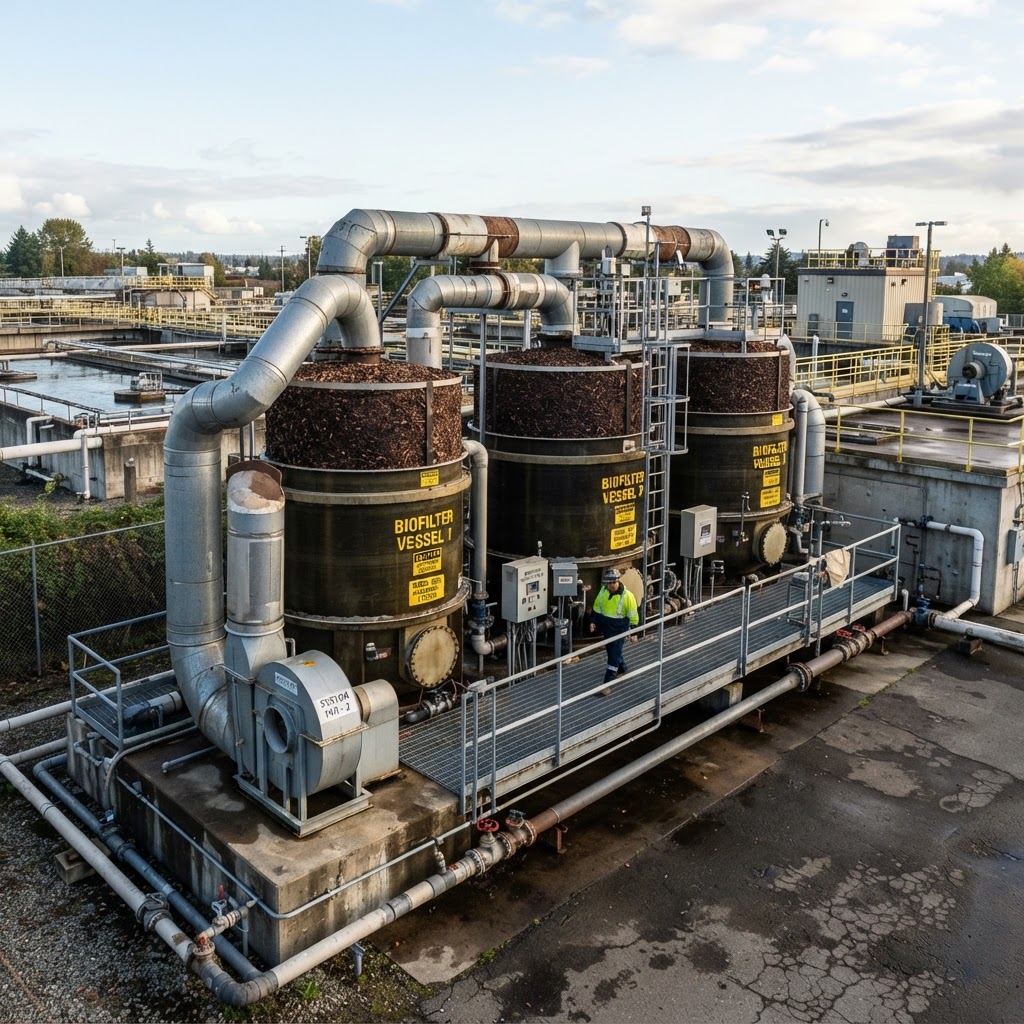
Odor complaints tend to arrive as a single data point, "it smells bad near the plant on Tuesdays", and the instinct is to treat the whole facility as the source. That approach wastes money on broad-spectrum solutions when the actual source is usually one or two specific unit processes. Correctly diagnosing where the odor originates is most of the work; the fix is often straightforward once you know that.
Headworks and preliminary treatment are the most common source in collection-system-fed plants, because septic conditions develop in force mains and long gravity sewers before wastewater ever reaches the plant. Hydrogen sulfide (H2S) forms under anaerobic conditions in the collection system and flashes off as a gas the moment it's exposed to turbulence at the headworks, bar screens, or grit chambers. If odor complaints correlate with specific pump station discharge cycles or with hot weather (which accelerates septic conditions in force mains), the fix usually starts upstream in the collection system, not at the plant. Options include chemical addition (calcium nitrate or iron salts to bind sulfide, or bioaugmentation) at problem pump stations, and covering or ventilating the headworks structures themselves with air sent to a scrubber or biofilter.
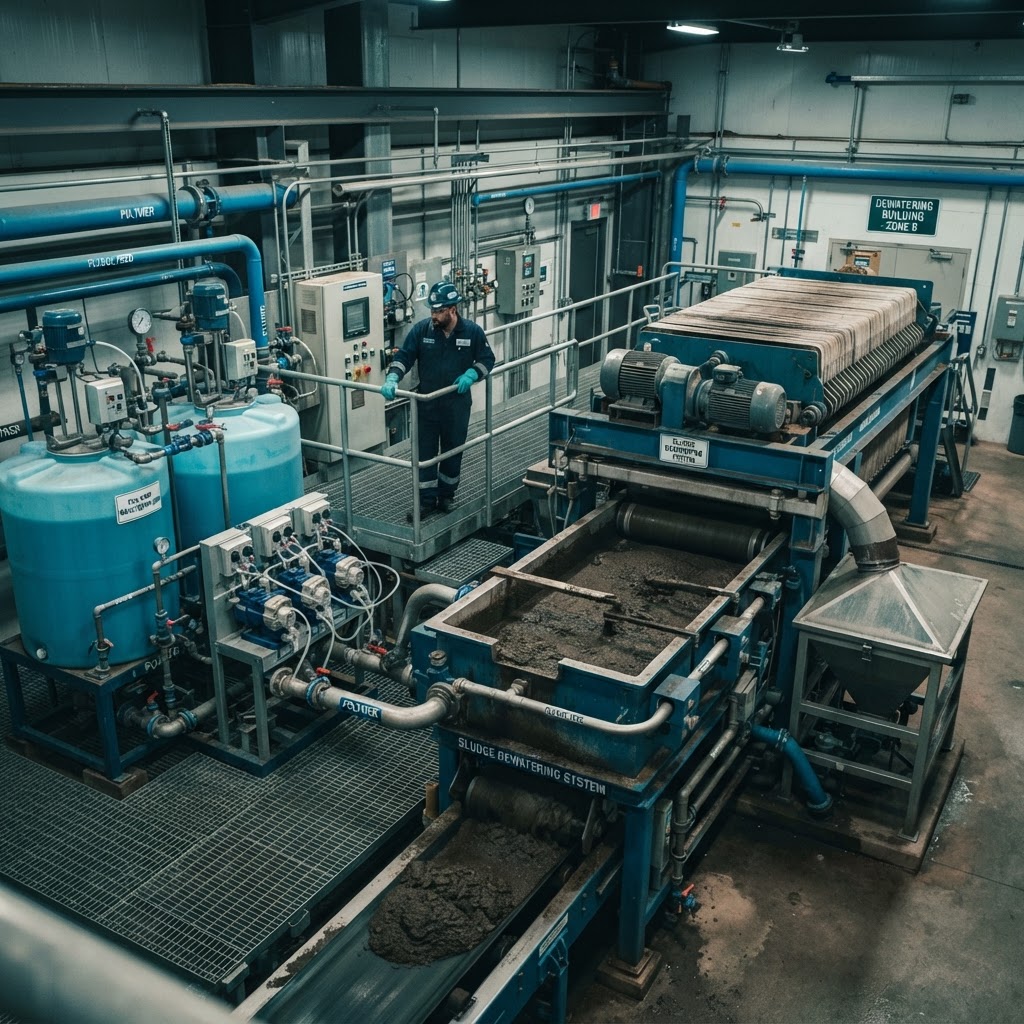
Sludge handling and dewatering are the second major source, particularly anaerobic digestion feed/discharge points and belt filter press or centrifuge operation. Sludge that's gone anaerobic during storage or transport releases sulfide compounds and mercaptans when it's agitated or exposed to air during dewatering. If odor complaints track with dewatering schedule, covering the dewatering building and routing exhaust air through a biofilter or chemical scrubber addresses it directly, along with minimizing storage time for sludge between digestion and dewatering.
Biofilters and chemical scrubbers solve the problem differently and fit different situations. Biofilters use a media bed (wood chips, compost, or engineered media) colonized by odor-consuming bacteria, and work well for continuous, moderate-strength odor loads at a lower operating cost than chemical scrubbing, but need consistent moisture and periodic media replacement to stay effective. Chemical scrubbers (typically caustic/hypochlorite for H2S) handle higher and more variable odor loads reliably but cost more to operate due to chemical consumption; they're often the right choice for headworks covers where loading spikes with flow and force main discharge timing.
Masking agents deserve a specific warning: they don't remove the odor-causing compound, they just add a competing scent, and neighbors and regulators increasingly recognize this as a non-solution. A masking agent program can actually work against a utility during a permit or nuisance complaint review, since it demonstrates awareness of an odor problem without demonstrating a genuine treatment response.
Before investing in capital odor control equipment, get real data: portable H2S monitors placed at the suspected source over several days, correlated against wind direction and complaint timing, will confirm or rule out a hypothesis for a few hundred dollars in rented equipment rather than a six-figure guess.
A structured odor complaint log, recording date, time, wind direction, and specific location described by the complainant, builds the dataset needed to correlate complaints against plant operations credibly, rather than relying on memory or anecdote when a pattern needs to be demonstrated to regulators or the public.
Community relations matter alongside the technical fix: proactively notifying nearby residents ahead of a planned activity known to generate temporary odor, like digester cleaning or major dewatering campaigns, reduces complaint volume even when the odor itself is unavoidable that day.


Don't stop at the article.
The industry's most useful newsletter, straight from the plant floor.
One email. No fluff. New lessons, equipment breakdowns, and process control notes, delivered when there's something worth reading.