
Reading a Clarifier: What Sludge Blanket Depth Tells You
Sludge blanket depth is one of the most underused diagnostic tools on the plant floor. Here's how to read it correctly.
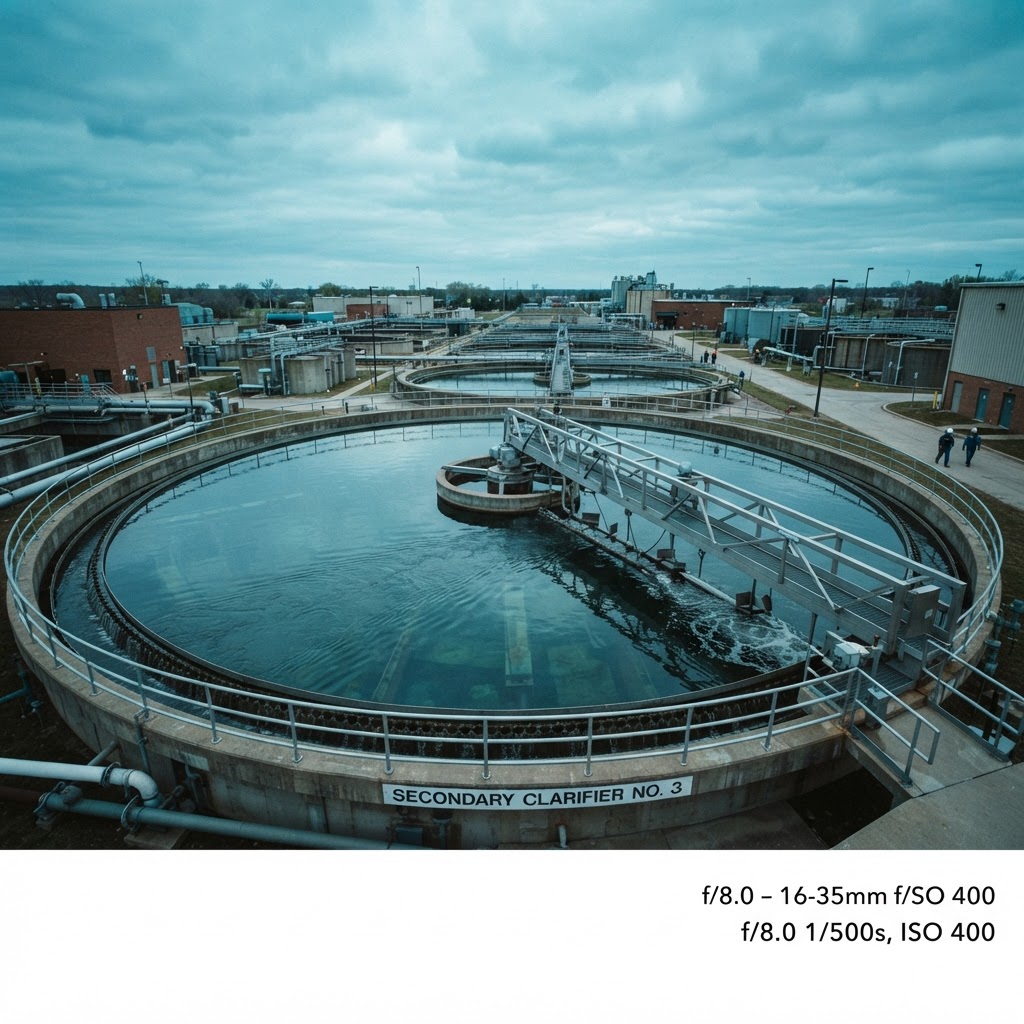
Every secondary clarifier is quietly telling you a story about your process, if you know how to read it. Sludge blanket depth, the distance between the water surface and the top of the settled solids layer, is one of the simplest and most revealing measurements an operator can take, yet it's often skipped in favor of lab numbers that take hours to come back.
A shallow blanket usually means solids are settling quickly and clarity is good, but it can also be an early warning of underloading or a wasting rate that's too aggressive. A rising blanket, on the other hand, often points to poor settleability, filamentous bulking, a sudden organic load increase, or a return activated sludge (RAS) rate that can't keep up with incoming flow.
The measurement itself is straightforward: lower a sludge judge or core sampler slowly into the clarifier at multiple points and note where the interface between clear water and settled solids sits. What matters more than any single reading is the trend. Taking this measurement at the same time, same locations, every shift builds a dataset that will flag problems days before effluent quality suffers.
When you see the blanket climbing steadily, don't just increase your RAS rate reflexively. Check your SVI (Sludge Volume Index) first, a high SVI means the sludge itself has gotten harder to settle, and pumping harder won't fix a settleability problem. In that case, look upstream: aeration DO levels, F/M ratio, and recent influent characteristics are usually the real culprits.
Make blanket depth part of your daily rounds, log it alongside DO and MLSS, and you'll catch process upsets while they're still cheap and easy to correct.
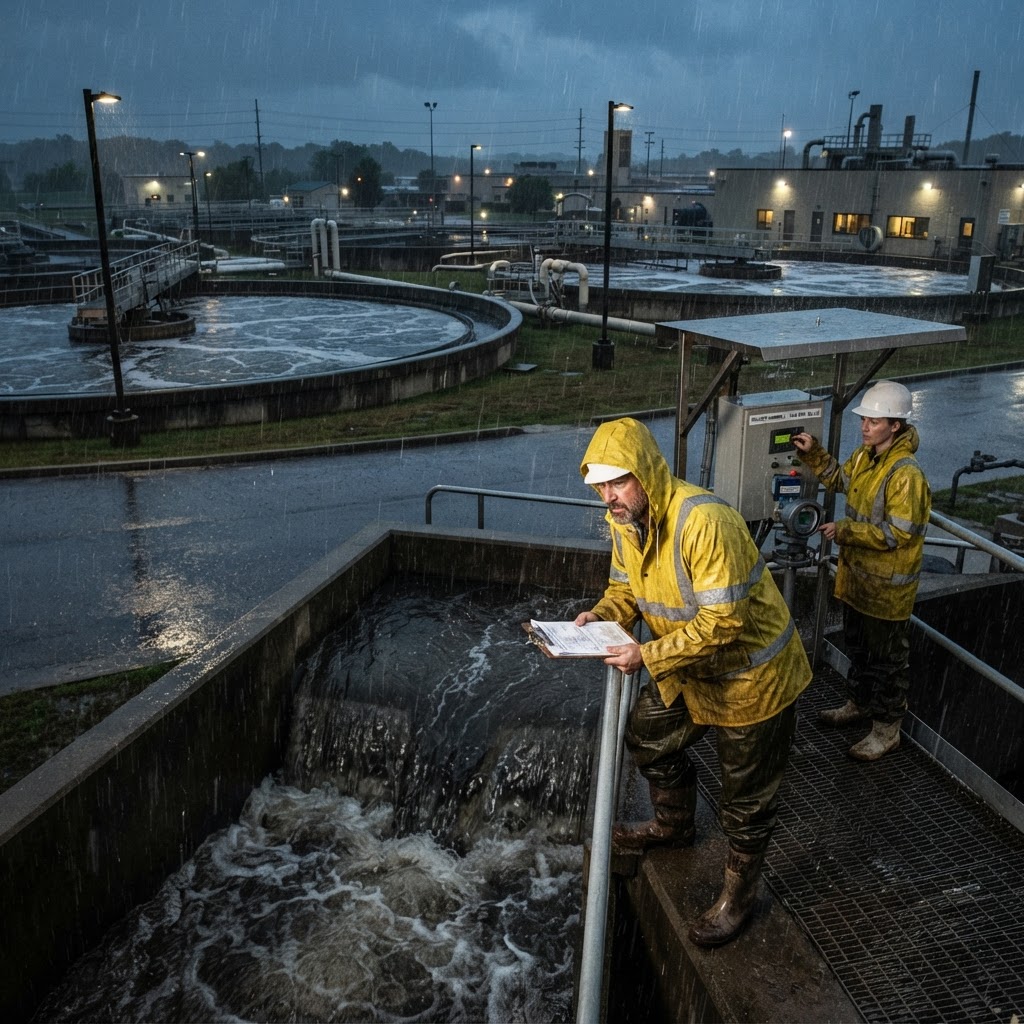
Beyond daily rounds, blanket depth data becomes far more powerful when it's paired with a settling test. Run a standard 30-minute settleometer test alongside your blanket reading a few times a week: if SVI is climbing while blanket depth rises, you're looking at a genuine settleability problem, most likely filamentous bulking. If SVI stays flat but the blanket still climbs, the cause is more likely a hydraulic or loading issue upstream, not a biology problem. Confusing the two leads operators to over-correct RAS rates when the real fix is upstream, for example, addressing a seasonal industrial discharge or a temporary flow surge from wet weather.
Different clarifier designs also change how you should interpret the same reading. Center-feed clarifiers with rim weirs tend to show a fairly uniform blanket across the tank, so a single measurement point is often representative. Peripheral-feed or rectangular clarifiers can have significant blanket variation from one end to the other, and relying on just one sample point can mask a localized problem, like short-circuiting near an inlet, that a full-tank profile would catch immediately.
It's also worth tracking blanket depth against temperature. Cold weather slows biological activity and can change floc density, sometimes producing a deeper blanket even when the process is otherwise stable. Operators who don't account for this seasonal shift can end up chasing a 'problem' that's really just an expected winter pattern, wasting wasting-rate adjustments that then have to be walked back in spring.
Finally, don't treat a single anomalous reading as an emergency. Sludge blankets can shift temporarily due to routine events like a RAS pump hiccup or a brief flow spike. What matters is the multi-day trend line, not any one number in isolation, build the habit of looking at the last five to seven days together before deciding whether an adjustment is actually warranted.
A useful habit: log sludge blanket depth at the same time each day and same location in the clarifier, since blanket depth naturally varies across the tank and inconsistent measurement location adds noise that can mask a real trend. Pair the depth reading with a settleometer result from the same mixed liquor sample to distinguish a hydraulic loading issue from a settleability issue.
When a rising blanket doesn't respond to increased wasting within a day or two, check RAS pump performance directly rather than continuing to increase the waste rate; a RAS pump running below its rated capacity can look identical to a wasting problem in the daily numbers.
Don't stop at the article.
The industry's most useful newsletter, straight from the plant floor.
One email. No fluff. New lessons, equipment breakdowns, and process control notes, delivered when there's something worth reading.