
Wet Weather Operations: Managing Peak Flows Without a Permit Violation
A wet weather plan built before the storm hits is the difference between a routine high-flow event and an unauthorized discharge report.
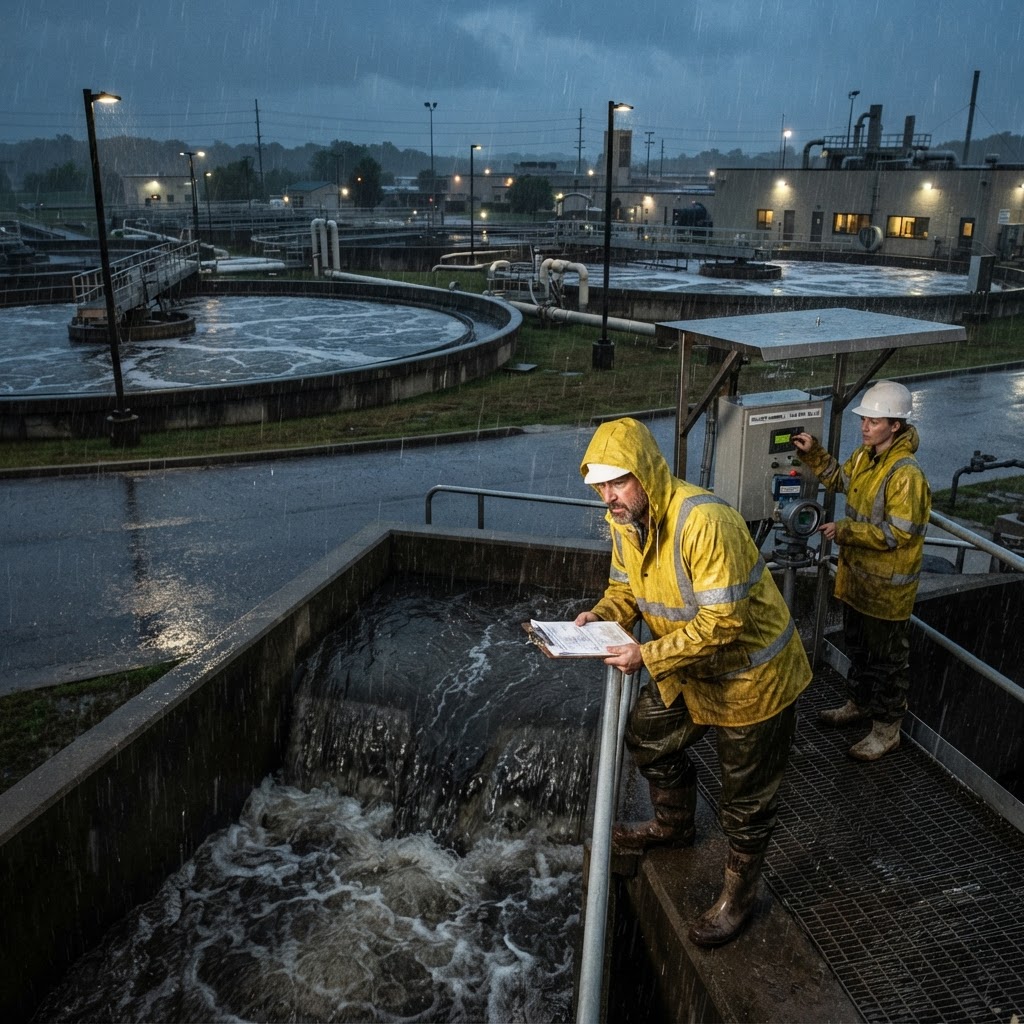
Every plant with any combined sewer or significant inflow and infiltration eventually faces a storm that pushes flow well past design capacity. What separates a routine high-flow event from a permit violation and an unauthorized discharge report is almost always preparation done before the storm, not decisions made during it.
Flow equalization is the first line of defense, and its value depends entirely on whether the basin is actually available when the storm hits. Equalization basins only help if they're empty, or close to it, at the start of a wet weather event. A basin that's still holding water from a storm three days ago provides no buffer for the next one. Building a clear internal procedure for how quickly equalization storage gets drawn down after each event, and confirming that procedure is followed rather than assumed, is one of the highest-value low-cost wet weather investments a plant can make.
Bypassing decisions, when and where flow gets diverted around a treatment step to protect downstream biology from being washed out, need to be pre-planned, not improvised. A biological process that gets hydraulically overloaded during a peak event can lose enough biomass to affect performance for a week or more afterward, sometimes doing more lasting damage than a properly managed, permitted bypass would have. Most permits specify exactly which bypass conditions are authorized and which require prior notification or are prohibited entirely; operators need this reference memorized or posted at the control point, not looked up after the decision already needed to be made.
Disinfection capacity often becomes the actual bottleneck during wet weather, even when biological treatment handles the flow adequately. UV systems have a fixed hydraulic capacity beyond which dose per unit volume drops below the level needed for compliance; chlorination systems have a fixed maximum feed rate. If peak wet weather flow regularly approaches or exceeds disinfection system capacity, that's a capital planning gap worth flagging well before the next major storm season, since disinfection failures during high flow are one of the more common causes of reportable violations industry-wide.
Notification requirements are frequently the part of a wet weather event that gets missed under pressure, not the technical response itself. Many permits require notification within a specific window (often 24 hours) for any bypass, upset, or noncompliance event, regardless of whether it was ultimately harmless. Having a pre-written notification template with the required fields already identified means the report goes out correctly and on time even when everyone involved is focused on keeping the plant running.
After the event, a structured after-action review, what triggered which decision, what worked, what didn't, feeding back into the wet weather plan, turns each storm into an improvement to the next one rather than a one-time scramble that gets repeated with the next event. Plants that skip this step tend to relearn the same lessons every wet season.
A useful planning exercise before wet season: walk through last year's worst storm event hour by hour, and identify the exact decision points where equalization, bypass, or disinfection capacity became the binding constraint. Building next season's plan around last year's actual bottleneck, rather than a generic checklist, produces a far more useful wet weather plan.
Staffing during a wet weather event deserves explicit planning too; a plan that assumes normal staffing levels during a multi-day storm event, when the same limited crew is also fielding customer calls and managing collection system response, tends to break down exactly when it's needed most.
Don't stop at the article.
The industry's most useful newsletter, straight from the plant floor.
One email. No fluff. New lessons, equipment breakdowns, and process control notes, delivered when there's something worth reading.